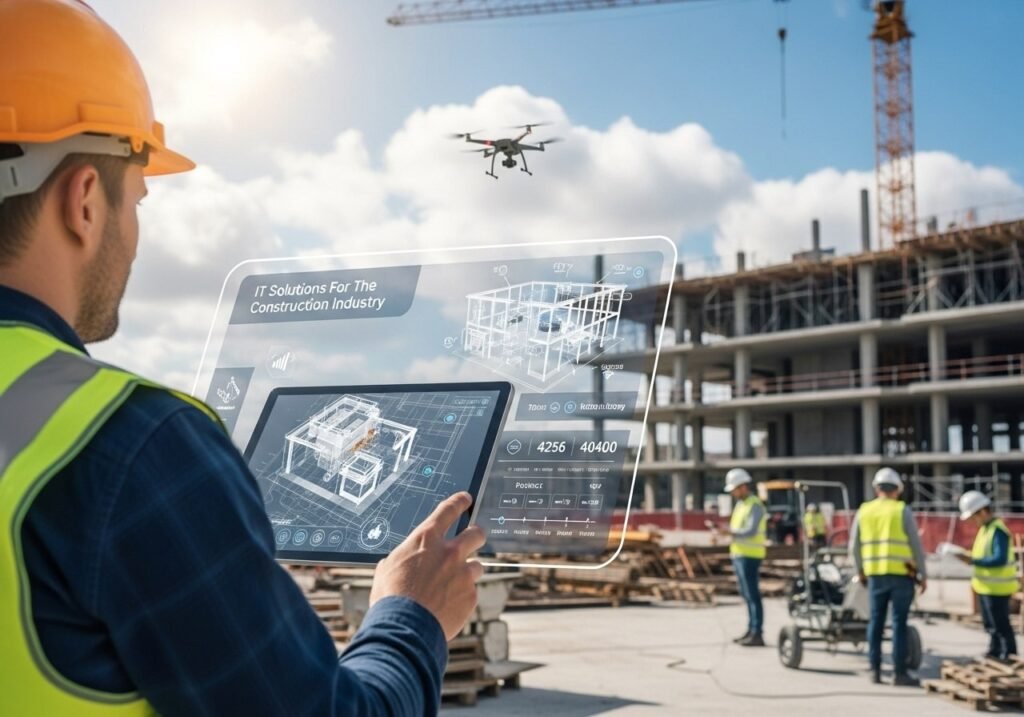
The increasing significance of IT solutions in construction The historical hands-on and labor intensive construction sector, is witnessing a dramatic change towards digitalization.
As technology continues to evolve at a fast-paced rate, construction industry businesses are turning more and more to IT solutions to increase operations efficiency and safety – the win-win factor.
Construction is an industry rife with delays, cost overruns and inefficiency. But the landscape is changing with IT solutions — and construction projects are becoming more efficient and cost-effective.
While the industry starts to adopt 21st century tech — and develop new models to maintain a competitive edge in the age of digital everything.
Role of Construction IT Solutions
Ultimately, use of IT solutions in the construction industry has to be about better outcomes. These are fundamentally altering the way that everything from project management and planning, to the construction process itself is being approached.
They can see the progress as it happens, observe material consumption, foresee potential complications and work with teams on-site or remotely. The use of information technology (IT) in the construction industry is no longer simply a trend – it is an imperative for staying ahead.
With that kind of pressure – combined with tight project deadlines, regulatory pressures and competition – the construction industry must adopt technology into its systemsFlow to survive.
Relevance of IT Solutions
IT solutions for the construction industry are currently in higher demand than ever. For construction companies, embracing these technologies is not only about gaining a leg up on the competition — it’s survival.
With the cost of construction on an upward trajectory, skilled labor shortages everywhere and projects becoming more complex by the day, businesses that are not adopting technology to get ahead are in danger of falling behind.
Whether that be boosted collaboration, better safety or reduced cost, IT solutions are driving construction businesses to excel in the face of these challenges.
What are Construction IT Solutions?
Construction Information Management The term IT solutions for the construction industry denotes the employment of technology in development at different layers starting with design, planning, building and maintenance.
These include a variety of tools and systems that will make workflow better, help reduce mistakes, increase communication between various teams and stakeholders.
As they are being utilized, they can be remedied for inefficiency and make operations much more efficient, ultimately proving to be major time and cost savers as well as productivity enhancers in construction projects.
Key Components of IT Solutions
Construction IT services usually encompass the following:
Software: Software includes the likes of project management, schedule, budget and cost estimating software as applied to construction. It also includes drawing and modeling tools, such as Building Information Modeling (BIM) systems which display 3D models of buildings and structures.
Hardware: In building, IT hardware could include mobile devices, sensors, drones and others field tools to collect and pass data in real time for better project tracking and decision making.
Cloud Services: Cloud services are interactive and collaborative, with the ability to store and share data that is updated in real time, so every party involved on-site or off always has access to the most current project data.
Data management tools: These tools enable construction companies to capture, organize and analyze large volumes of data, enabling them to make more informed decisions, forecast problems and enhance the results of a project.
Scope of IT Solutions
The range of IT services in construction is wide. These solutions influence each stage of construction:
Project Management- IT based tools provide better planning and scheduling by process automation, tasks are assigned appropriately in effective manner, resources are utilized optimally to achieve the utmost deliverables within deadline.
Execution and Monitoring: Through the collection of real-time data on how work is progressing as well as monitoring material usage, project managers can monitor in-progress work to make sure it is being done according to regulations and safety standards.
Maintenance: IT solutions is also crucial during operation, as they aid with asset management and predictive maintenance to keep buildings and infrastructure in tip-top shape long after the construction crews have packed up.
The Major Usages of IT Services in Construction
Improved Project Management
Construction is an incredibly complex and large-scale operation. Balancing numerous project teams, suppliers, subcontractors and stakeholders can be overwhelming. But IT solutions provide construction firms with an opportunity to cut through these tasks.
Track tasks, allocate resources, and monitor progress with project management software to keep projects on-time and under budget. By using these tools, delays and bottlenecks may be anticipated at an early stage and converted into a proactive approach to prevent downgrades.
Cost Reduction
Cost-effective The use of IT solutions in the construction sector allows to cut costs. Badly organized work, lost time or waste can cause construction projects to go over budget.
These challenges can be alleviated with the aid of information technology tools that enable accurate cost prediction, material monitoring and waste control.
Companies can use project management software and data analytics to determine how money is being squandered, they say, and take corrective action before costs spin out of control.
Real-Time Communication
Communication is the key to a successful construction project! Courtesy of users, PlanBetter facilitates instant communication between all parties involved in a contract through IT applications, from project managers and employees to contractors and suppliers.
Cloud-based collaboration tools and mobile applications make for easy communication between project teams, who are capable of exchanging updates back and forth, as well as resolving issues on-the-spot to avoid costly delays from misinformation or lack thereof.
Enhanced Safety
Construction Safety is of utmost importance as accidents and injury can lead to serious repercussions in construction industry. IT solutions, including wearables and sensors, assist in monitoring worker health and safety at the construction site.
Construction managers, collecting information on worker behavior, location and environmental factors can also use the system to preempt signs of danger before it becomes an issue. Software applications can also be used to ensure compliance with safety standards and regulations, which can prevent accidents.
Data-Driven Decision Making
In construction, decisions are frequently made with partial or dated information. But IT can also leverage analytics to get a more nuanced view of the project’s health.
By anticipating delays to evaluating the impact of different construction materials, data-driven intelligence enables more better decisions. This ultimately means better project results, fewer delays and superior cost-efficiency.
What Kind of IT Solutions For Construction Industry. Here’s how some different IT solutions are transforming construction. The Last Planner solutions are providing different tools to support various stages of construction projects.
Building Information Modeling (BIM)
BIM has been one of the most important technological developments in construction. It enables architects, engineers and contractors to work together on a 3D digital model of the project, visualizing and coordinating details.
BIM makes it easier to identify design errors at an earlier stage, minimize expensive repeat work and enhance collaboration between teams. It also facilitates the better management of the project life cycle, from design to construction and (possibly) maintenance.
Construction Management Software
Project management software like Procore, Buildertrend and PlanGrid can assist with managing construction tasks such as scheduling, budgeting and communication. These solutions are interfaced to other IT tools (like BIM) and offer a single point of access for project teams and critical documents.
Project Scheduling and Estimating Tools
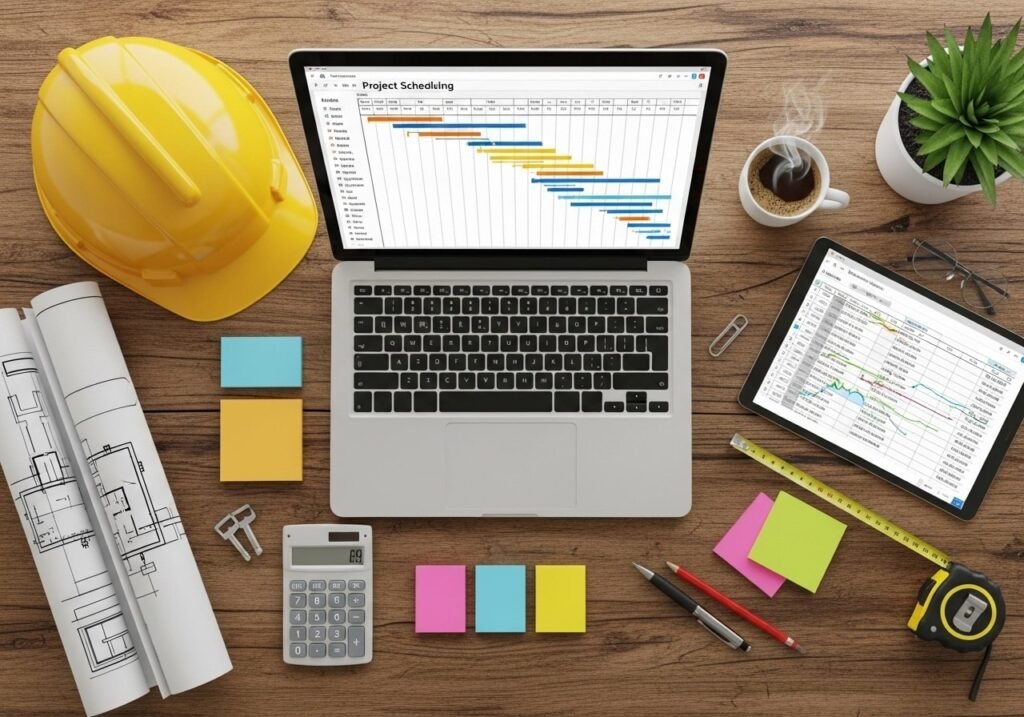
The importance of proper scheduling and estimation in construction is significant. Powerful scheduling features that let construction managers allocate resources are available in IT tools such as Microsoft Project and Buildertrend. In addition, such tools can generate reliable costing solutions and reduce the likelihood of cost blowouts.
Drones and Robotics
Aerial Surveys/Inspections – Drones A1 learn how to effectively survey using our DJI Inspire Drones, providing real time data and accuracy. Robotic systems such as bricklaying bots or robot arms to carry heavy stuff are another example of input enable technology in construction that aids in increasing productivity, decreasing human workload and mistakes.
Cloud Solutions
Cloud-based systems provide many advantages, such as the ability for everyone to work from anywhere on the globe and simply that all players share a single view of a project.
Cloud-based solutions provide easy documentation management, versioning control and real-time updates to ensure you always have the most up-to-date project data.
Challenges of IT Enabled Solutions in Construction Industry Although the advantages of information technology solutions in construction are obvious, their deployment is not devoid of difficulties.
High Initial Costs
Upfront investment in IT systems can be a challenge for construction companies. From buying software to investing in your hardware and training your team — those costs can quickly compound.
Though the initial investment may equal a small fortune, for many companies it pays dividends through increased productivity and spending over the long term.
Resistance to Change
Are You Averse to Taking More Risk? The construction industry usually lags behind in adopting changes, especially new technologies. There are still countless companies that trust in traditional solutions and hesitate to invest in the IT sector.
Addressing this resistance demands sound change management techniques, such as training of personnel, top-level backing and obvious articulation to staff of the advantages in adopting these technologies.
Integration with Legacy Systems
As such, many construction firms are heavily entrenched in outdated IT, with legacy systems which do not support the most modern solutions. Adding new, compatible technology to your legacy software can be time and resource-consuming but is essential in your journey to a truly digitalized workflow.
Sometimes companies will have to rip out their entire IT stack in order to take full advantage of new solutions.
Training and Skill Gaps
With technology moving so fast, re-training your people to use a new tool is a big headache. It is likely that many construction workers do not have the skills to handle sophisticated software or equipment.
Training and upskilling There can be no gain, without training As with any IT solution investment, it’s important that you maximise its functionality.
Selecting the Right IT for Your Construction Business
The best IT solutions for your construction company are key to improving operations and achieving growth. But there is a lot to choose from, and it is not easy to make the right decision. Here are some of the factors to consider when weighing your options.
Assess Your Needs
You’ll want to assess the unique needs of your business before implementing any type of IT solution. Various types of construction companies encounter different challenges, such as project delays, communication problems, safety problems and budget overruns.
Knowing what troubles are plaguing your business will assist you in deciding which IT tools can best solve those problems. For instance, if you have a lot of project delays and resource issues, then you should look into project management software with scheduling.
If you’re struggling to communicate with your remote teams, you might require a cloud-based collaboration tool. By having these pain points in mind early on you can filter the list of potential IT solutions out there and make sure that, when selecting your tools, they match up to what it is you want to acheive!
Customization vs. Off-the-Shelf Software
An important fork in the road when selecting IT solutions is whether you should go with off-the-shelf software or custom-built solutions. Common off-the-shelf solutions include Procore or Buildertrend, which are found in a large percentage of the businesses and can have tons of out-of-the-box features.
They are usually more feasible and also less expensive. However, they might not quite address your business’s unique needs. The other extreme are custom-made products which are designed to meet exactly your unique needs with more flexibility.
Although more costly and take longer to build, tailored applications are the best fit for your (specific way of) doing business. For construction businesses that have unique requirements, or significantly complex business processes, it may be more cost effective over time to consider implementing a tailor-made solution.
Vendor Selection
After you’ve evaluated your requirements and chosen the kind of solution (off-the-shelf, custom-built) that would be a good fit, you need to pick a vendor. Selecting the right vendor is key, as getting it wrong can result in frustration and extra costs later on.
Important factors to consider when choosing an IT vendor are:
- Support: Make sure there is adequate customer support provided by the vendor – from training to troubleshooting to maintenance.
- Cost: Look beyond the initial purchase price to subscription fees, customization costs and additional services.
- Scalability: As the needs of your business change, it is crucial to opt for solutions that can keep pace with your growth. Make sure the vendor provides scale up options as your business grows or projects become more complex.
- Reputation: Do your research. Also look at the reviews, testimonials and case studies to measure the vendor’s reliability and industry position in construction.
- Selecting an IT vendor the right way is a big decision, and it will largely affect how well your IT solution facilitates your business’s overall success.
- The Role of IT in the Construction Industry
As the construction market evolves, so will technology that fundamentally changes how business is done. These advances will not only increase efficiency and safety, but they will also pave the way for more sustainable and smarter construction.
Trends On the Horizon: AI, Machine Learning and IoT

Below are some of the significant advances to help make construction easier and more effective.
Artificial intelligence: AI has the potential to enhance decision-making in construction through the analysis of large datasets and forecasting future trends. Project management tools backed with AI can predict when projects will end, identify likely obstructions and recommend changes as they happen.
AI algorithms can also be used to automate more repetitive tasks such as scheduling, budgeting and cost estimation. Machine Learning (ML): A form of AI uses ML to enable systems to learn from historical project data and predict potential issues before they become a problem.
AI can also recognize from past projects what factors may put a project at higher risks of cost overruns, or delays, and offer solutions. Internet of Things (IoT): The development of IoT technology, helps connect equipment and materials to the internet for smarter construction.
Sensors built into construction machines, tools or building materials can, for example, provide real-time data on everything from how machinery is running to the state of the environment they requires in which to operate helping to optimize resource use and management.
This information can be leveraged for energy optimization, safety enhancement and flow optimization. They are not simply innovations that will be around in future − they are now already being used on construction sites across the globe and more will follow.
Smart Cities and Construction
With the increasing urbanization of cities, the demand for intelligent and sustainable infrastructure is rising. The incorporation of IT technology in building smart cities shall contribute to the resource saving, environment friendly and citizens comfortable.
In the construction industries there is a growing use of IT in order to assist with smart building/city development. Ranging from smart traffic management to energy consumption efficient buildings, loaded with technology, IT is helping to create a greener urban future.
Construction companies involved in these projects must keep up with the times by embracing IT solutions that not only cater to current expectations, but are forward looking ones – such as capabilities for smart technology and renewable energy systems integration.
Construction companies of the future look for opportunity in the face of challenge As our cities move towards smart living, big techno opportunities are opening up to those traditional construction businesses that are bold and brave enough to innovate.
Meanwhile, IT solutions can soon help produce buildings and other infrastructure that will not only be more efficient, but which also will be made to endure the stresses of climate change and future urban challenges.
Conclusion
The building construction industry is currently undergoing a digital transformation. By improving project management as well as safety, communication and cost-reduction for the industry, there are many ways IT solutions can greatly impact the performance and efficiency of construction companies.
Through technologies like BIM, the cloud and AI, construction businesses can better cope with the complexities of today’s projects and stay relevant in a changing market.
Yet it’s always good practice to carefully consider the IT solution you select—given your business, its specific needs, potential for customization and whether you found “the one” with the right vendor.
With the right approach, construction firms can enjoy the benefits of information technology solutions and increase their chances for success, profit and longevity.
Call to Action
With the construction industry going digital, it is high time to use IT solutions. There are great benefits that come with being able to utilize technology whether you run a small building company or you operate a big enterprise. Adopt IT services, outpace competition, and make your business future-proof.
FAQ Section
What are the best IT services for construction?
Building Information Modeling (BIM), construction management applications (e.g., Procore, Buildertrend), project scheduling software solutions (e.g., Microsoft Project) and cloud-based collaboration platforms are a few of the most sought after IT solutions for construction business. And more drones and robots are being deployed in construction to perform surveying and automation.
In what ways can IT help reduce costs in construction?
IT services save money by making project management more efficient, eliminating waste, enabling collaboration and identifying inefficiencies before they waste resources.
Take project scheduling and budgeting software that ensures less expensive delays are avoided (or BIM which helps ferret out design issues ahead of time, again lowering the chances of costly do-overs).
What are the IT implementation challenges for construction companies?
Challenges involve relatively high upfront costs, the enterprise’s natural resistance to moving out of its comfort zone and adopting new technology, fitting in with existing legacy systems, and shortfalls in the company’s human resources pool.
Mitigating these challenges demands forward thinking, proper training and selecting the right IT solutions to match their needs and capacity.